When you’re developing commercial property, an ALTA survey is one of your most valuable tools. But the document itself can look like a maze of symbols, lines, and abbreviations if you don’t know what to look for. An ALTA survey contains a visual language that tells the complete story of your property. Understanding these symbols and markings means you catch potential issues before they cost you time and money.
This guide breaks down what those symbols actually mean so you can read your ALTA survey like a pro.
Why Understanding an ALTA Survey Matters for Commercial Properties
Who Uses ALTA Surveys
Lenders won’t fund your project without one. Title companies need it to issue insurance. Attorneys want it during due diligence. Your contractors expect it to plan site work. Investors reviewing the deal look at it carefully.
Everyone relies on the same set of symbols. When you can read them, you’re on equal footing with all the professionals involved.
What Those Symbols Actually Tell You
An ALTA survey is a visual document. Every line, mark, and symbol conveys information about your property’s boundaries, physical features, and legal restrictions. The survey becomes your property’s blueprint. It shows what you own, what you can’t use, and what could affect your development plans.
Decoding Boundary Lines, Property Corners, and Monument Symbols
Boundary Lines and How They’re Drawn
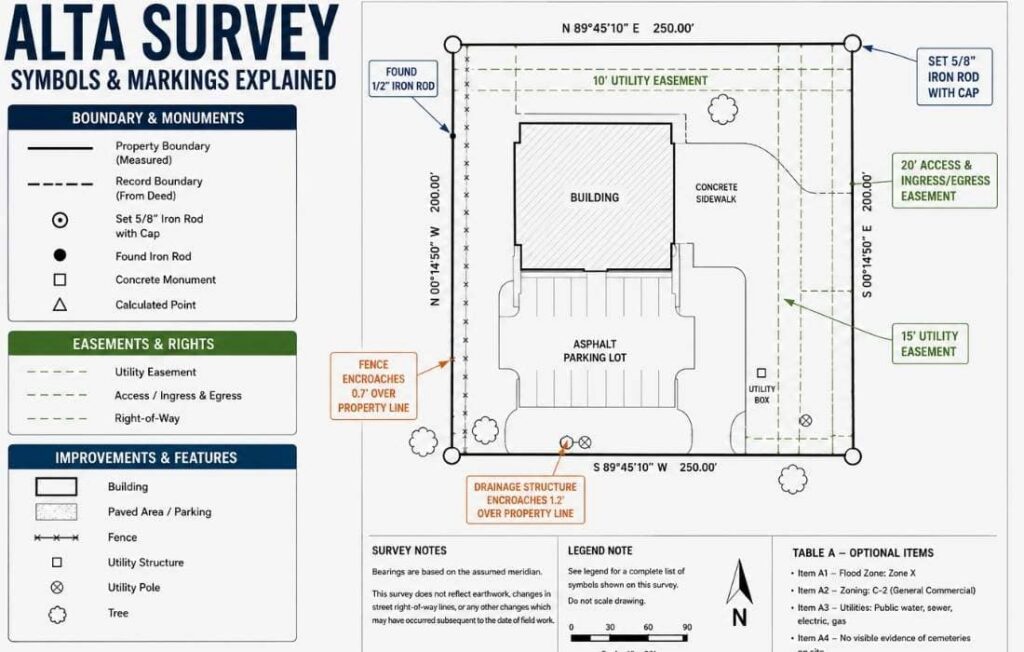
On an ALTA survey, the main boundary line (called the “subject property boundary”) is typically shown as a thick, solid line. This represents the legal edge of the land you own or control.
Pay attention to the line style. Different line weights and patterns mean different things:
- Solid, heavy lines indicate surveyed or measured boundaries
- Dashed or lighter lines show record boundaries from deeds or other documents
- Different line patterns distinguish between property lines and easement lines
Corner Markers and Monument Symbols
Where boundary lines meet, surveyors place or find corner markers. These are physical monuments in the ground. They might be:
- Iron rods or pins
- Concrete monuments
- Existing markers set by previous surveyors
- Rock formations or natural features
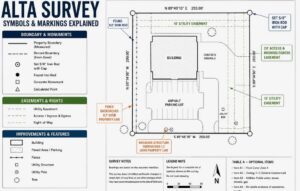
The ALTA survey symbol key shows how each type appears on the drawing. Iron rods often look different from concrete monuments. A found monument (one already there) is marked differently from a new one the surveyor set. Always check the legend to know exactly what each symbol means on your specific survey.
Measured vs. Record Boundaries
Here’s something critical for developers: the boundary the surveyor measured in the field might not match the boundary described in your deed. When this happens, the ALTA survey shows both. You’ll see the actual, measured boundary and the deed line separately. This discrepancy can affect your development plans, so it needs immediate attention during your due diligence process.
Understanding Easement, Access, and Right-of-Way Markings
What Easements Look Like on a Survey
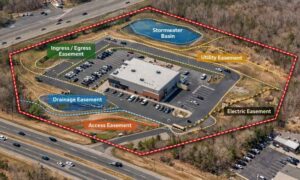
Easements are areas where someone else has rights to your land. Utility companies, neighboring properties, or public agencies might have easement rights. On an ALTA survey, easements are typically shown with a special line pattern or shaded area. The width and location matter for your development plans.
Utility Lines and Corridors
Power, gas, water, sewer, and telecommunications lines cross properties all the time. These show up on surveys as labeled lines with specific symbols. Don’t assume you can build directly over them. Developers need to know exactly where these run before planning any construction.
Access and Ingress/Egress Areas
Properties often rely on shared driveways or access roads. Ingress and egress rights let you enter and exit your property. These appear on the survey as dedicated areas with specific markings. If your property depends on shared access, that marking is essential information.
How Buildings, Improvements, and Encroachments Are Shown on an ALTA Survey
Building Footprints and Structures
Existing buildings and structures appear as outlined shapes on an ALTA survey. The thick, solid outline shows the exact building footprint. Windows and doors might be indicated, though this varies. Surveyors use one consistent line style for all building edges.
Parking Areas, Fences, and Site Features
Paved surfaces like parking lots show up differently from buildings, usually as outlined areas without wall thickness. Fences might be shown as line patterns. Dumpster enclosures, loading docks, and utility structures all have their own representations.
Spotting Encroachments
An encroachment happens when something crosses the property boundary. A neighbor’s fence, building, or drain system extending into your property. These are highlighted because they create legal issues. On the survey, encroachments are usually marked clearly with notes and special symbols. If you see an encroachment marked, your attorney and title company need to address it before closing.
Reading Survey Notes, Legends, and Table A References
The Legend Is Your Key
Every ALTA survey includes a legend or key. This is not optional reading. The legend explains every single symbol on that specific survey. Symbols can vary slightly between surveyors, so always check the legend for the document in front of you.
Survey Notes and Certifications
Below or beside the survey drawing, you’ll find text notes. These clarify what the surveyor found in the field. Notes might explain boundary discrepancies, describe monument conditions, or flag issues. Certification statements confirm the surveyor followed professional standards.
North Arrow and Scale
The north arrow shows property orientation. The scale tells you the relationship between drawing distances and actual measurements. Both matter for understanding how the property sits on the land and how to interpret distances shown on the drawing.
Table A and Optional Items
ALTA surveys can include optional elements listed in “Table A.” These might include:
- Flood zone information
- Zoning designation
- Utility locations
- Environmental restrictions
Check whether Table A items are included on your survey. If something you need isn’t listed, you might need a specialized survey instead.